
How I Became a Stranger
Feelings, unexamined, present themselves as thoughts; even, facts.
-Yiyun Li
I've never been great at sending postcards from my travels. And this newsletter, as much as I thought it would help me continue to feel connected to my community, has often been a reminder of the distance. This month marks two years since I boarded the Queen Mary with my husband and our two dogs. I remember the feeling, both excited and exhausted by the intense process of sorting, selling, and packing up two decades of life. I felt the absurdity and the dreamy thrill of putting the entire contents of one's life on a shipping container.
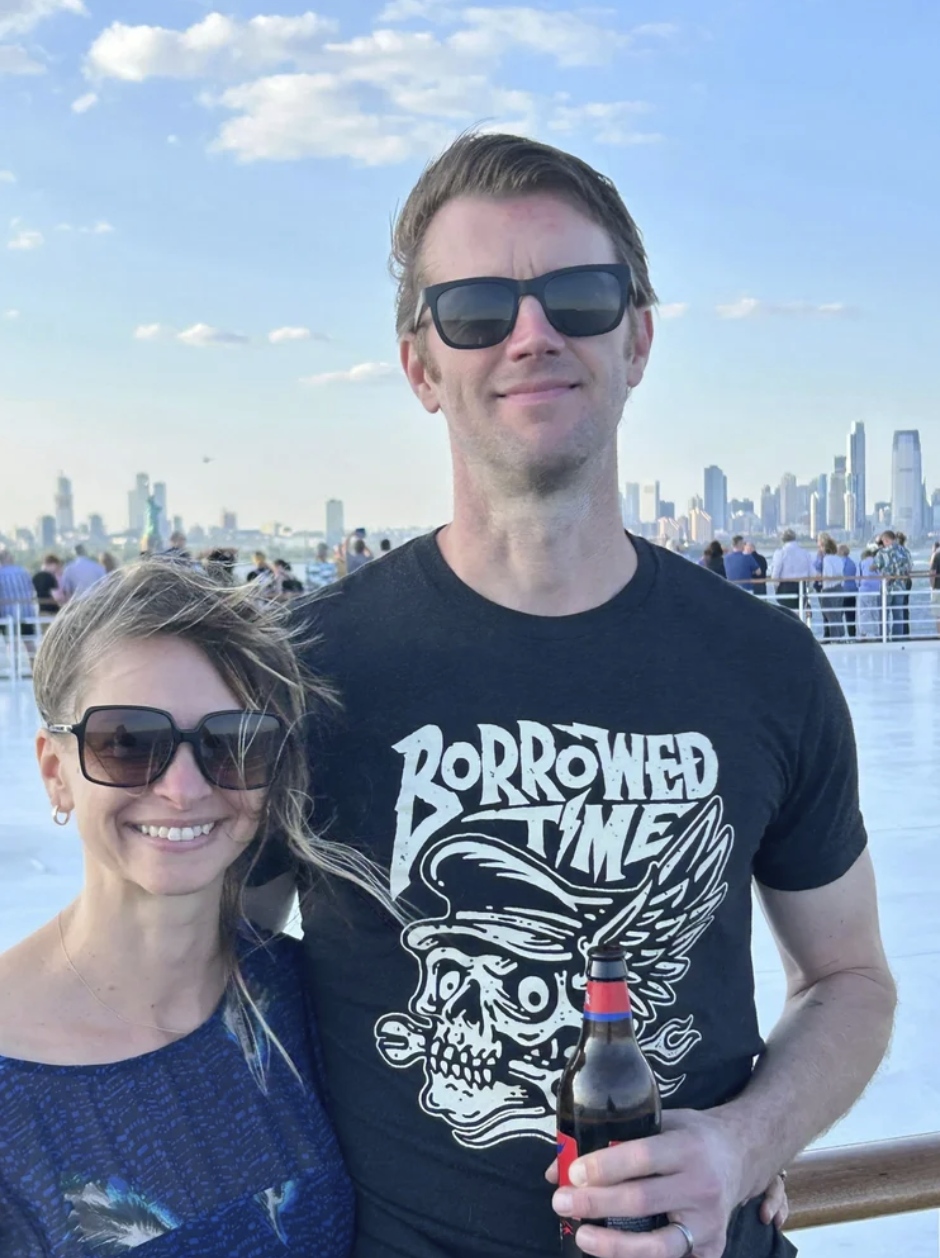
On a giant cruise ship bound for England and eventually Spain, we captured this Old World passage over the seas with a selfie, grinning between what was and what was not yet to be.
This is the story of how I became a stranger.
I thought I would have discovered more about my new life by now. I thought I would have written more by now. I thought I would have understood more about myself by now and that I would have shared more parts of my journey by now.
But I've chosen to keep many parts of this experience to myself. I've felt called inward, resistant to the performative. I’ve struggled with defining feelings that felt formless.
I have also felt too much to thoughtfully put into words. I could not possibly convey the truth of it. I felt I had lost my poetry, some of my realness.
Some days I had forgotten the lessons I've come to know over the years: that the act of writing helps me find the words and the truth of things, that it's okay to be in the middle of the thing with no answers, with no clarity. It's important to share the not-knowing, the not-quite-there-yet. It’s leveling.
The truth is, what I thought would feel like refuge has frequently felt like rupture. What I imagined as adventure has felt like anxiety. What I anticipated as a future filled with more peace, softness, and ease has often been hijacked by worry and fear. A longing stuck, not quite nostalgic, not exactly wishful.
I've written before about grief. It's easy to understand a grief that overwhelms you when someone you deeply love dies. Or a grief you experience when you lose your home in a hurricane, or your country through war, genocide. Floods and earthquakes that wipe out communities, loved ones. The embodied grief of miscarriage. The collective grief we feel when a public figure—aka an angel, aka Dolly Parton—dies.
But what about an ambiguous grief when you've made choices that steer your life in a completely new direction? A grief that flickers on and off in your chest hundreds of times a day, a force unrelieved by the heart’s four valves? A grief that doesn't make sense. That kind of grief is self-induced, perhaps unworthy of sympathy.
Maybe I’ve been grieving myself.
This morning, my husband and I had a lengthy conversation about our current lives, our past selves, and our future choices. We frequently end up here, in the existential. We might begin discussing Spanish verb conjugations and somehow veer off course toward ideas that require less action and more pause.
Toward the end of this long inquiry into our individual and professional trajectories here in Spain,
my husband said,
“I do know that I like it here.”
And I responded,
“Yes, but do you like how you feel here?”
Then to myself:
Do I like who I am here?
When I think about my life in New York, I love how I felt there. Not every moment, of course. But many of them. New York wasn't just a location to live; it was a city to belong to. It became a place that held up a mirror to who I could become.
I didn't belong because I lived or worked in a certain neighborhood. I belonged because my life continuously called me toward things that truly mattered to me. Dance and choreography. Pilates and healing. Meaningful relationships. Deep connections.
Now, Spain seems to be doing something different. It’s exposing my vulnerabilities, tiny cracks that reveal the lessons I haven’t quite learned. The parts of me that I’ve felt most proud of haven't had the chance to show up here, yet.
And yet, there are times when I don't recognize myself. It's not just that I'm living in a foreign country, it's that I am foreign to myself.
Who is this person who loved cruising through the bustling streets of Manhattan but is now afraid to drive down a steep country road?
Who is this woman who can't advocate for herself in a medical appointment?
Who is this lover of language who lost the ease of her native tongue and now wanders in wordlessness?
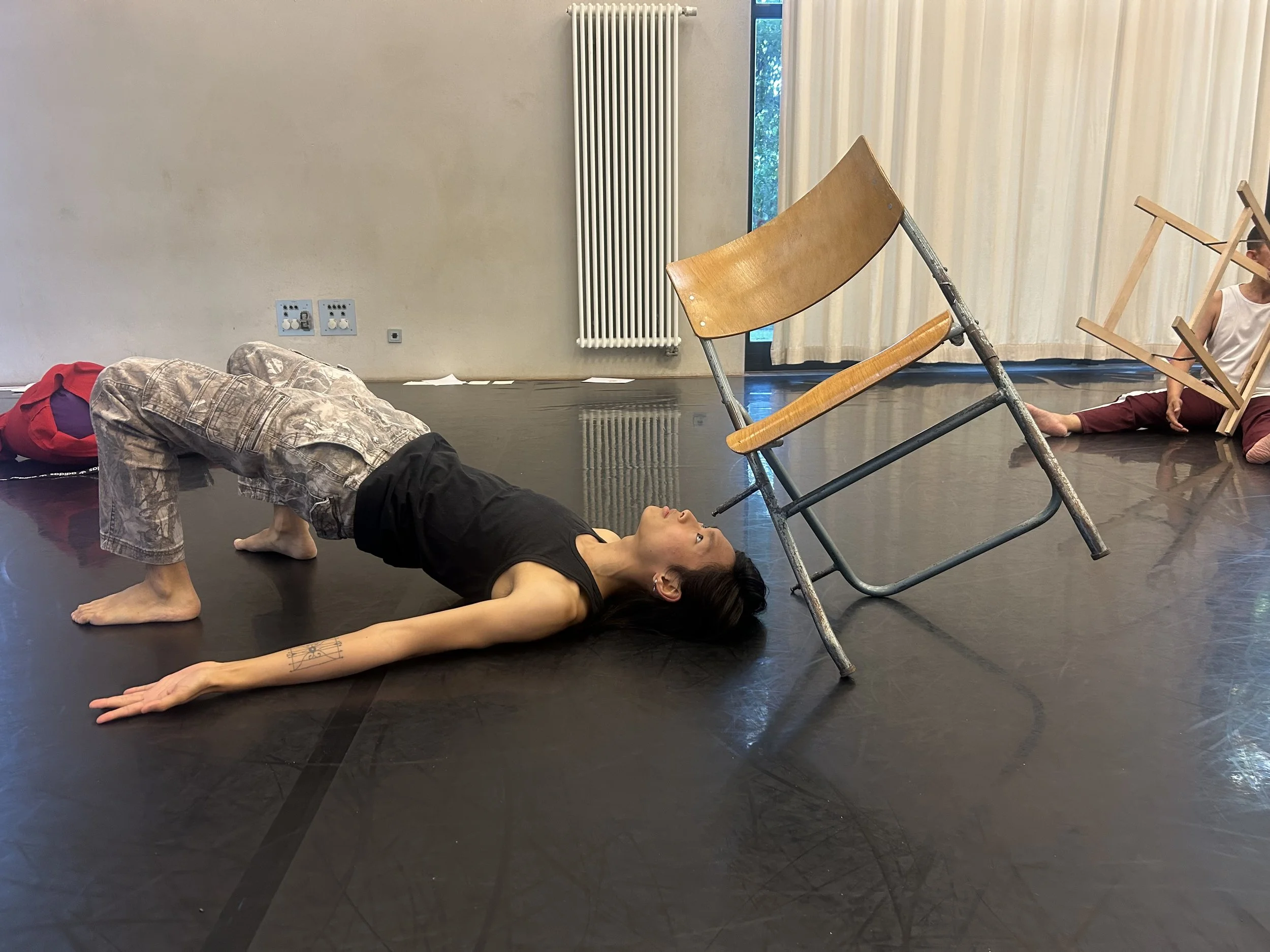
Experimenting with movement, objects, and edges at B12 in Berlin, with Steven Hou
The Gift of Beginner's Mind
Learning a new language provides ample opportunities for feeling like a beginner—a child, even—and this leaks into all aspects of life, from going to the grocery store (I mistakenly bought three kilos of mussels for dinner one night, which turns out is way too many mussels for a party of two) to making medical appointments and trying to communicate the nuance of health-related issues.
After explaining to a doctor, just a couple of months after moving to Spain, that I was experiencing some health concerns, the doctor informed me that now that I live in Spain I must learn Spanish, before walking out of the office. I was left feeling like I was to blame for my symptoms, like a child being scolded.
And I can see his point. Maybe he was trying to help. Maybe my symptoms would simply vanish if I could understand what people were trying to say to me at the grocery store. Maybe this disorientation would be easier to carry.
But cultural differences and lack of empathy aside, sometimes it feels like I left behind the more grown-up, more successful, more confident version of myself when I crossed the waters. On this side of the Atlantic, I can't quite access the part of me that really knows something and that knows how to communicate, even something as simple as understanding a stranger in the park asking me if my senior dog is a puppy. (After the third time, I now know the word for puppy is cachorro. Fern is flattered.)
I've also managed to find some levity while being unable to properly express myself. There have been plenty of moments to laugh at myself and at/with my husband. When we first moved to Spain and were out for a lovely dinner, my husband apparently asked the waiter to “sing it, please” when asking for the check. Just this week, he confidently greeted our neighbor, “Buenos días” in the evening. I sometimes confuse the little Portuguese vocabulary I know with Spanish and end up calling my chest a piece of fish.
Still, sometimes I forget how to have fun. I take it all too seriously. I worry I just don't have the capacity to become fluent in Spanish. I predict failure.
And yet, I am learning. Not only a new language, but how to be the person I know I am when the conditions that helped me become her are no longer there.
Was New York really the training wheels?
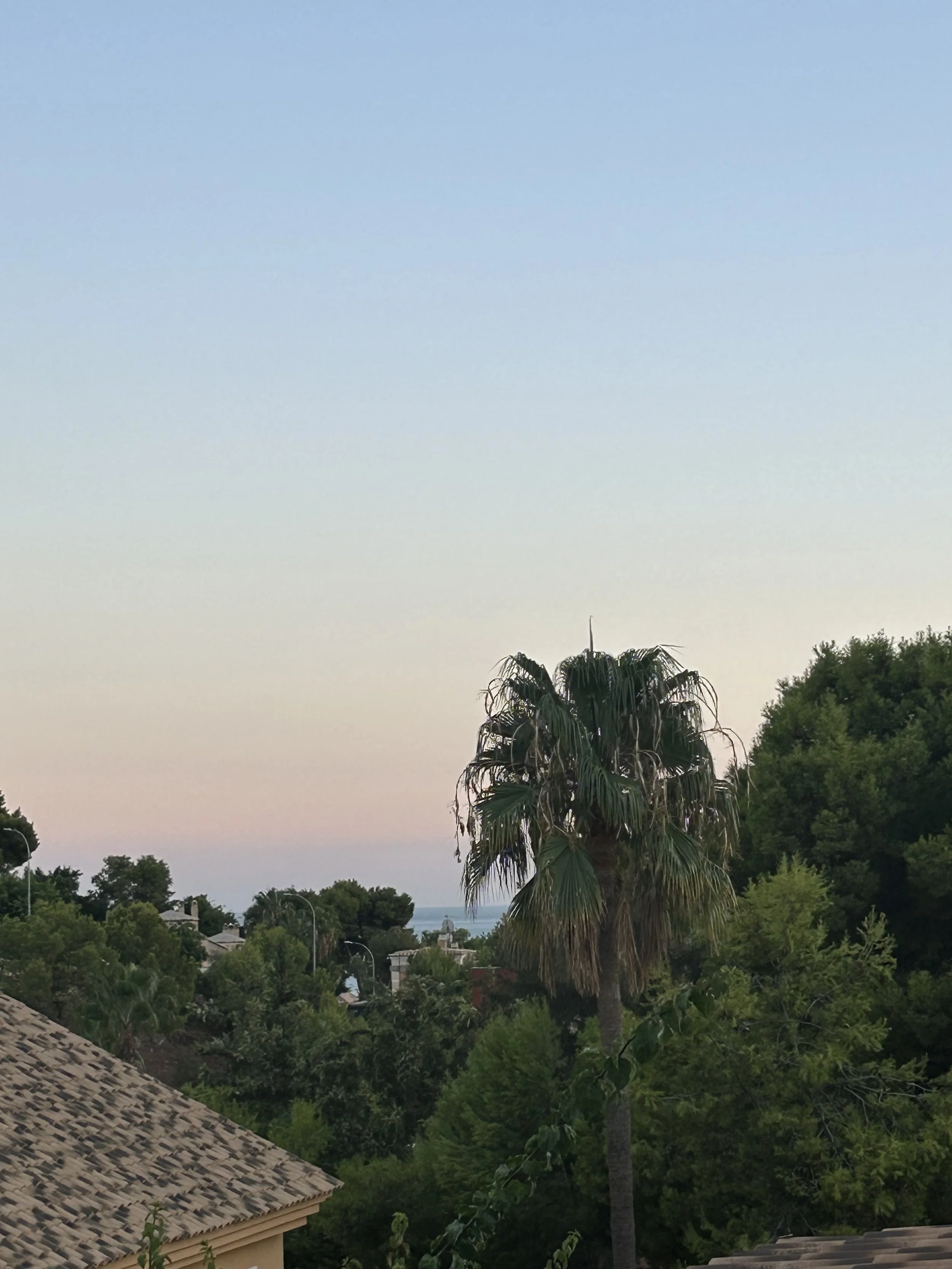
Maybe today, with this particularly vulnerable sharing, I'm learning that it's okay to say that I, too, am soft and struggling.
That I thought I would know something by now.
That admitting this is all harder than I imagined is freeing.
In continued gratitude for being a part of this.
-Brynne
“There’s nothing more basic or radical than telling the truth and listening to the truth, from other people.”